
Astrology
All times provided are EST (Eastern Standard Time)

Event Title
Event Time
Event Date
Change the event description to include your own content. Adjust the settings to customize the style.
June 2026
SUN
MON
TUE
WED
THU
FRI
SAT
Find your birth moon
Enter your birthday to see what phase the moon was in during your birth.
This will not store your data.

What Your Sun Sign Represents
In astrology, your Sun sign is the zodiac sign the Sun was in when you were born. It's the foundation of most horoscopes and is often considered the core of your personality, identity, and life purpose.
Think of it this way: Sun Sign = Who you are at your core.
What Your Sun Sign Represents
Your Sun sign is associated with:
-
Identity – How you see yourself.
-
Purpose – What motivates you and gives your life meaning
. -
Vitality – Your energy, confidence, and sense of self.
-
Self-Expression – How you naturally shine and share your gifts with the world.
In many spiritual traditions that incorporate astrology, the Sun symbolizes the conscious self—the part of you that is growing, evolving, and becoming throughout your lifetime.
Find your big 3
This will not store your data. Please consult additional sources
Your Results Will Appear Here.

The Summer Solstice is Near!
How Can I Celebrate the Solstice?
Watch the Sunrise
Wake up early and watch the sun greet the day.
Observe the colors, the sounds, and the feeling of being present in the moment.
Take a Solstice Walk
Walk through a forest, park, beach, or neighborhood.
Notice the signs of life around you.
Pay attention to the plants, birds, insects, and trees.
Reconnect with the season itself.
Practice Gratitude
Write down everything that has grown in your life since winter.
-
Accomplishments.
-
Lessons.
-
Friendships.
-
Moments of joy.
Share a Meal
Historically, many solstice celebrations centered around community.
-
Invite family or friends together.
-
Cook a meal.
-
Tell stories.
-
Laugh.
Celebrating the Solstice Across Cultures & Practices
The Celts and the Sacredness of the Living World
Among the ancient Celtic peoples of Britain and parts of Western Europe, the natural world was viewed as animated and spiritually alive. Rivers, springs, forests, hills, and stones were not simply features of the landscape; they were places where spiritual power could be encountered. Although historians continue to debate the exact details of Iron Age Celtic solstice practices, later folklore and archaeological evidence suggest that Midsummer was regarded as a period when the boundaries between the seen and unseen worlds became more permeable.
Many folk traditions held that herbs gathered during the solstice possessed heightened potency. St. John's Wort, Mugwort, Yarrow, and Vervain were often collected around Midsummer and used for protection, healing, divination, and blessing rituals. Bonfires were lit on hilltops throughout parts of Britain and Ireland, symbolizing the power of the sun at its peak while also serving as communal gatherings where stories, songs, and traditions were shared.
Examples of Celtic and folk practices include:
-
Gathering medicinal and magical herbs at sunrise.
-
Lighting bonfires for purification and protection.
-
Walking sacred landscapes such as hills, springs, and stone circles.
-
Divination and dream work associated with seasonal transitions.
-
Giving thanks for agricultural abundance.

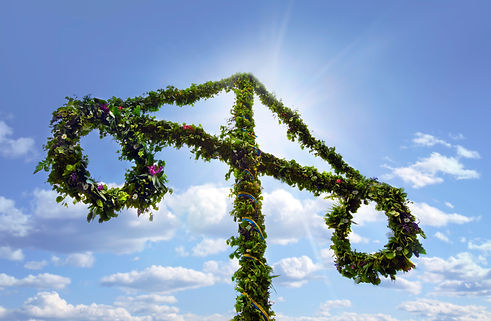
Scandinavian Midsummer: Celebrating the Victory of Light
For the peoples of Scandinavia, the Summer Solstice held profound significance because of their relationship with darkness. Long winters and limited daylight made the arrival of summer feel transformative. Midsummer celebrations became some of the most important festivals of the year, reflecting gratitude for light, warmth, and fertility.
Modern celebrations in Sweden, Finland, and Norway still preserve echoes of these older traditions. Flower crowns are woven, communities gather outdoors, songs are sung, and large communal meals are shared. While many participants today view the holiday as cultural rather than spiritual, its roots lie in older beliefs concerning fertility, agricultural prosperity, and the life-giving force of the sun.
Examples of Scandinavian solstice traditions include:
-
Wearing flower crowns made from seasonal plants.
-
Dancing around decorated poles.
-
Feasting with family and community.
-
Gathering wildflowers believed to bring dreams or blessings.
-
Celebrating the abundance of the growing season.
Ancient Egypt: Solar Power and the Promise of Renewal
The Summer Solstice held particular importance in ancient Egypt because it occurred near the annual flooding of the Nile River. The flood transformed the landscape, depositing fertile soil that made agriculture possible. Because Egyptian civilization depended upon the Nile's cycle, astronomical events became deeply intertwined with spiritual life.
The sun god Ra occupied a central role within Egyptian cosmology. His daily journey across the sky symbolized life, order, and divine authority. The solstice represented a moment when solar power reached its height, reinforcing the connection between cosmic order and earthly prosperity.
For the Egyptians, observing the heavens was not separate from spirituality. The movements of celestial bodies demonstrated that the universe remained in balance and that life would continue.
Examples of Egyptian solstice symbolism include:
-
Honoring solar deities associated with creation and order.
-
Observing celestial events as signs of divine balance.
-
Recognizing the connection between the sun and agricultural fertility.
-
Celebrating the renewal brought by the Nile's annual flooding.
