
The Chitlin' Circuit & The Jersey Shore
- Hause of Xroads
- Mar 20
- 4 min read
The Chitlin’ Circuit was never just about performance. It was about survival.
In the early to mid-20th century, Black artists traveled a country that profited from their talent but denied their humanity. They could fill rooms, but not sleep in them. They could headline stages, but not enter through the front door. So the circuit became a map of safety.
A network of Black-owned clubs, theaters, restaurants, and rooming houses that stretched from the Mississippi Delta to the Northeast. Each stop was a promise. You can eat here. You can rest here. You can play here.
And eventually, the road led to the ocean.
Atlantic City: A Different Kind of Destination
Atlantic City was already a place of escape. A resort town where people came to spend, indulge, and disappear for a while. But like the rest of America, it was divided. Black visitors and performers were largely confined to the Northside.
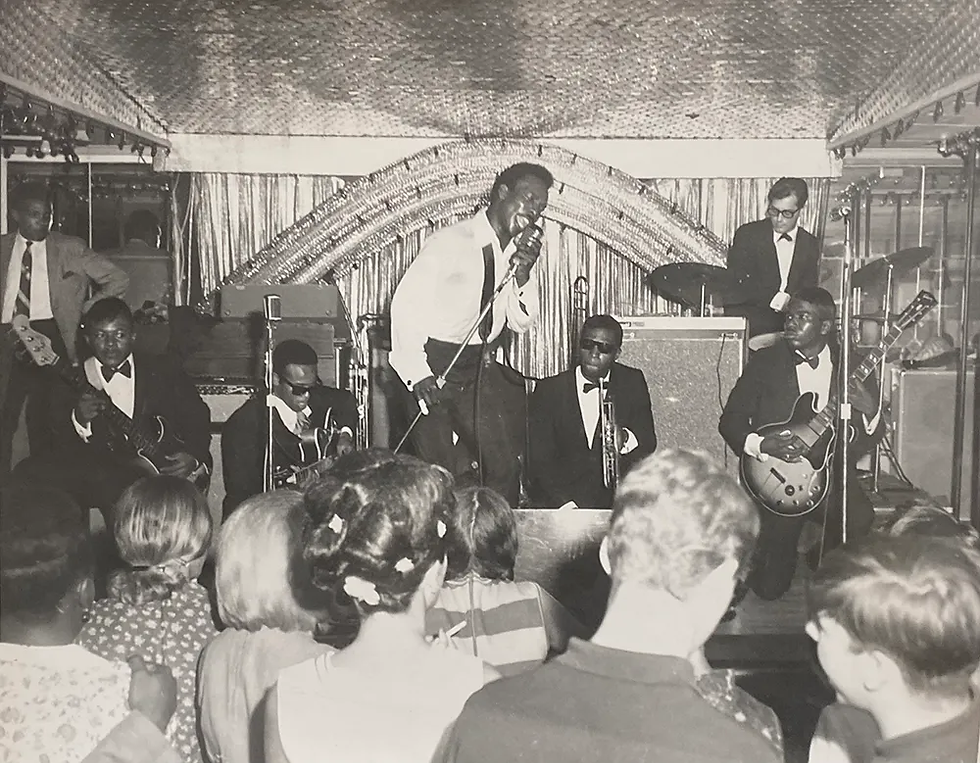
That world centered on Kentucky Avenue. In Atlantic City’s Northside, Kentucky Avenue drew audiences from major cities and featured all-night programming and “breakfast shows,” with multiple clubs operating within steps of each other.

At one end, you had Club Harlem, owned by Leroy “Pop” Williams, a space that rivaled any venue
in the country. Big bands, national acts, packed floors, and a sense that something important was happening inside those walls.
Across the street, Grace’s Little Belmont offered something different. Smaller, tighter, more intimate. The kind of place where the music sat close to your skin. When the main clubs closed, the Belmont stayed alive. The night shifted there, softer but no less powerful.
Down the block, places like the Paradise Club and Wonder Gardens added their own frequencies. Each venue held a different

mood, a different sound. Jazz in one room. Blues in another. A singer somewhere between.
And between those doors, the street itself became part of the experience. People moving, talking, eating, drifting from one rhythm into the next.
The Artists Who Carried It
The names that passed through Kentucky Avenue are now history, but at the time, they were working musicians moving along the circuit.
Duke Ellington
Ella Fitzgerald
Count Basie
Sam Cooke
They performed in grand hotels for white audiences. Rooms filled with applause, money, and visibility. But when the lights went down, they came back to Kentucky Avenue.
Because that’s where they could exhale.
That’s where they could be part of something that welcomed them.
Springwood Avenue’s “Little Harlem”
In Asbury Park’s West Side, Springwood Avenue’s “Little Harlem” is explicitly described by an official New Jersey historic funding program as part of the Chitlin’ Circuit.
Springwood Avenue was not just a street. It was a current. A pulse running through the West Side of Asbury Park. This was where Black life gathered. Where music stretched past walls and into the night. Where the Jersey Shore’s Chitlin’ Circuit didn’t just pass through, it rooted itself. anchored by venues like the Turf Club and surrounded by a dense Black business and nightlife district.
The Artists Who Carried It
The names that moved through Springwood Avenue weren’t just performers.
They were shaping sound in real time.
Billie Holiday
Count Basie
Ruth Brown
Ray Charles
And later, something shifted again…
Jimi Hendrix
Little Richard
They came through the West Side. Through the Turf Club. Through small rooms and late-night spaces. Not polished. Not distant. Close. Immediate. Alive.
This wasn’t just performance. This was Black life.
Beyond those performance hubs, evidence from the Victor Green's publications of The Negro Motorist Green Book grouped Shore communities (including Cape May, Wildwood, Ocean City, and Atlantic City) into a “Seashore Recreational” safe zones for Black Americans that supported resort labor and vacation travel, the kind of infrastructure that touring entertainers relied on.
Town | Venue | Operating Dates |
Atlantic City | Club Harlem | 1935-1980s |
Atlantic City | Grace's Little Belmont | 1930s-1970s |
Atlantic City | Wonder Gardens/Bar | 1929-2001 |
Atlantic City | Paradise Club | 1920s-1954 |
Atlantic City | Chicken Bone Beach | Historically Preserved |
Atlantic City | Liberty Hotel | 1938-1966 |
Asbury Park | Turf Club | 1956-Present Preservation |
Asbury Park | Big Bill's Lounge | 1960s-1973 Destroyed by fire |
Asbury Park | Orchid Lounge | 1965-1990s Destroyed by fire |
Asbury Park | State Ballroom | ? -1954 |
Asbury Park | Cuba's Spanish Tavern & Night Club | 1934 - ? |
Wildwood | Elfra Court Motel | 1950-1975 |
Wildwood | The Harmon Hotel | 1961-1966 |
Wildwood | Rose Marie Manor | 1959-1962 |
Cape May | Grant Street Beach | Historically Preserved |
Cape May | De Griff Hotel | 1938-1966 |
Cape May | Mrs. S Giles Tourist Home | |
Ocean City | Comfort Hotel | 1938-1960s |
Long Branch | Beach 3 | Historically Preserved |
The Legacy
The Jersey Shore’s place on the Chitlin’ Circuit may not look the way it once did, but it hasn’t disappeared. It lives in fragments. In buildings that still stand. In streets that still carry memory, even when the music is quiet.

You can still walk Kentucky Avenue, where Club Harlem once held the night. You can stand on Springwood Avenue, where the sound moved between doors and into the street. You can visit the Northside of Atlantic City or the West Side of Asbury Park, where Black culture built entire worlds within

constraint.
Some landmarks are gone.
Some have been renamed.
Some are only remembered through stories.
But the ground is still there.
And if you know what you’re looking at, you’re not just visiting the shore. You’re standing in a place where music, movement, and community once refused to be contained.
Comments